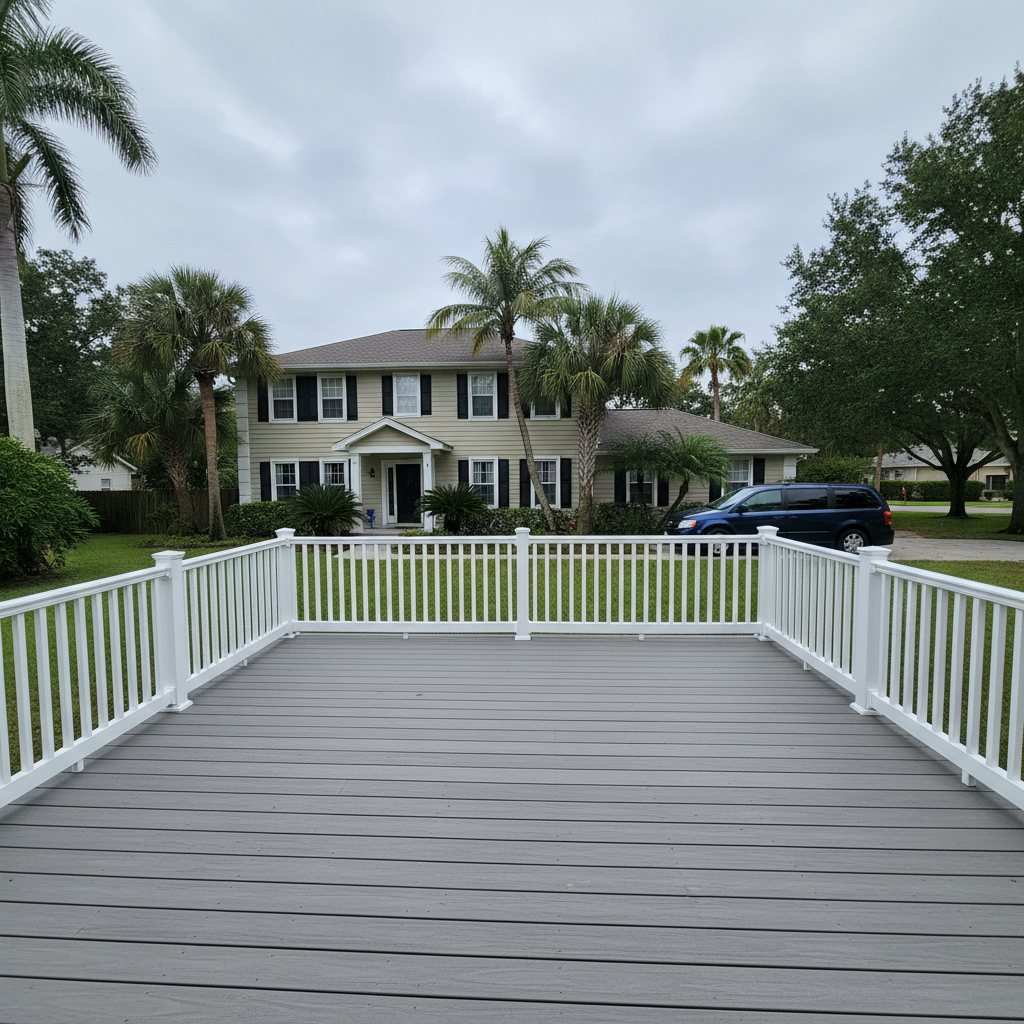
A deck in Bradenton takes more abuse than one in most of the country. You've got sandy soil that drains fast but shifts under footings if they're set wrong, a water table that sits close to the surface in a lot of neighborhoods near the Manatee River and Wares Creek, and a wet season from June through September that dumps afternoon thunderstorms on the same boards day after day. Add hurricane season running June 1 to November 30, and a builder here either knows how to account for all of that or you find out the hard way two years in. Here's what actually separates a good hire from a bad one.
Check the license and the insurance, not just the truck
Florida requires a state contractor license for deck construction, either a Certified Building Contractor or Certified Residential Contractor license, or a local Manatee County competency card for more limited scope work. Ask for the license number and look it up yourself on the state's licensing board site. It takes two minutes. Also ask for a certificate of insurance showing general liability and workers' comp. If a crew gets hurt on your property and the company isn't covered, that liability can land on you as the homeowner. A contractor who hesitates to hand over either document is telling you something.
Permits aren't optional here, and skipping them is a red flag
Most deck work attached to a house in Bradenton or unincorporated Manatee County needs a building permit, pulled through the City of Bradenton or Manatee County building department depending on where the lot sits. A permitted job gets a footing inspection before concrete goes in, a framing inspection before decking goes down, and a final inspection when railings and stairs are complete. If the property is in a flood zone, which plenty of lots near the bay and the rivers are, there may be additional elevation requirements to check. A builder who tells you permits are a waste of time and money, or offers to "keep it off the books" to save you the fee, is cutting a corner that matters. If you ever sell the house, an unpermitted deck can hold up the closing or force you to tear it out.
Ask what's going in the ground and what's holding it to the house
Two things fail on decks around here more than anything else: the footings and the ledger board. Sandy soil needs footings sized and set deep enough to resist shifting, usually poured concrete piers below the frost-free depth that local code calls for, which in this region is mostly about soil bearing capacity rather than frost since we don't get hard freezes. A contractor should be able to tell you footing size and depth without pulling out a laptop. The ledger board, the piece bolted to your house that the whole deck hangs off of, has to be flashed properly so rain doesn't run behind it and rot the rim joist. That flashing detail is boring to explain and easy to skip, which is exactly why some crews skip it. Ask directly: "How are you flashing the ledger?" If the answer is vague, keep looking.
Material choices should match the climate, not just the budget
Pressure-treated southern yellow pine is still the most common deck frame material here because it's affordable and holds up if it's properly fastened, but it needs stainless steel or coated, corrosion-resistant screws. Regular galvanized fasteners break down faster in our humidity and salt air, especially within a few miles of the coast. For the decking surface itself, homeowners are choosing composite more often now because it doesn't need the staining and sealing that wood does every year or two, and it handles UV and moisture better over a Florida summer. Wood is cheaper up front and can look great, but it needs real maintenance, cleaning and resealing on a schedule, not just when it starts to look gray. A good builder will walk you through this trade-off honestly instead of pushing whatever they have the most margin on.
What should be in the contract before anyone touches a shovel
- A written scope describing footing depth, joist spacing, decking material, and railing style, not just "build deck, 12x16."
- A payment schedule tied to milestones, not a large deposit up front. A third at signing, a third at framing, the rest at completion is a reasonable structure.
- A rough timeline. A straightforward ground-level deck might run one to two weeks from framing to final boards; a raised deck with a screened porch combo or a pool deck tied into existing concrete can run four to six weeks depending on inspections and weather delays.
- Who pulls the permit, and that it's listed on the contract, not handled as a side conversation.
- A line on what happens if an inspector fails the footing or framing step and what the fix costs.
If a contractor pushes back on putting any of this in writing, that's the moment to walk.
Walk away from these, no exceptions
Walk away from a contractor who won't give you a physical address or a local landline. Walk away from pressure to sign the same day for a "discount." Walk away from a quote that's dramatically lower than two or three others for the same scope of work, since that gap usually gets made up later in change orders or in materials you didn't agree to. And walk away from anyone who tells you Bradenton's older neighborhoods, the ones with homes from the 1950s through the 1970s near downtown and Palma Sola, don't need extra care around existing plumbing, septic lines, or old concrete footers already in the ground. Those lots have history in the dirt that newer subdivisions out toward Lakewood Ranch and Parrish simply don't, and a builder who's done the work locally will ask about it before they ever bring out a shovel.
None of this is complicated once you know to ask. A homeowner who checks the license, asks about the ledger flashing, and gets a real contract is going to end up with a deck that's still solid in ten years instead of one that needs rebuilding in three. If you want someone to walk through your yard and talk specifics rather than guesses, that's the kind of conversation Excellence Deck Company has with homeowners every week.